Protection against lightning and power surges
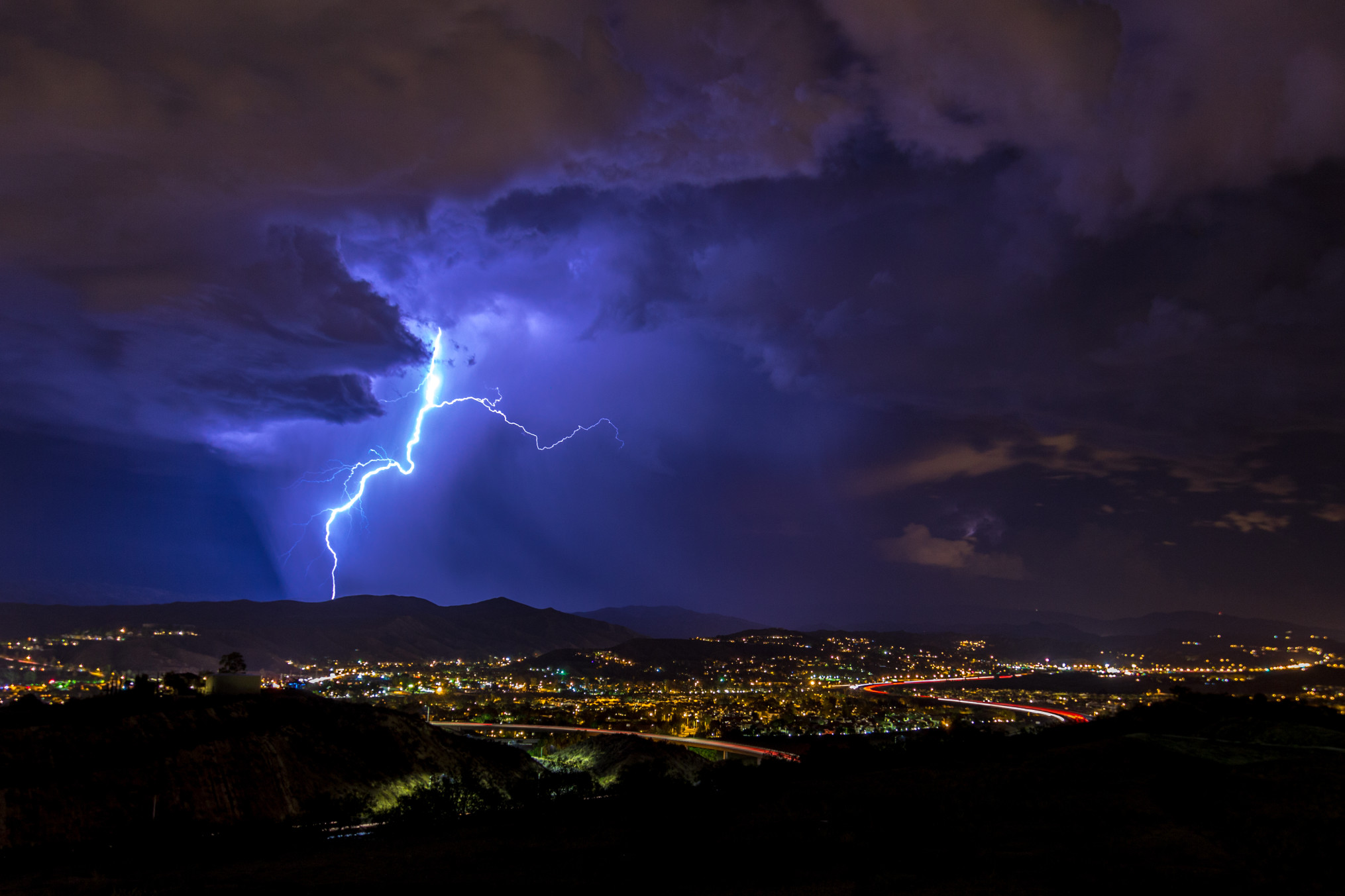
Lightning is one of the worst events an electrical installation can face: it can cause injuries, fires and permanent damage to equipment. In Lebanon the number of lightning strikes reaches about 1.3 per square kilometre per year, more than 13,000 strikes a year.
DHAS has worked on lightning protection since 1973. We design and install complete protection, following international standards: lightning arrestors and conductors outside the building, earthing in the ground, and surge protection on the electrical lines inside.
Lightning arrestors and conductors
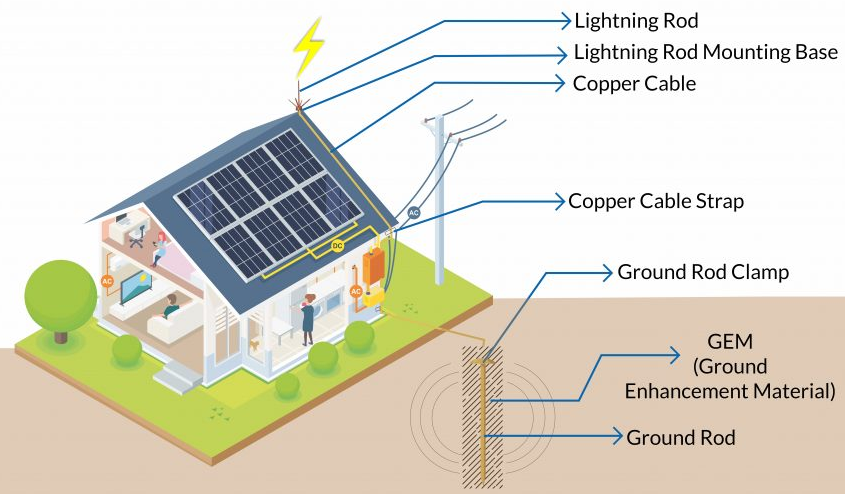
Lightning arrestors protect structures against physical damage from lightning strikes. They are placed at critical points of the structure and connected to a lightning conductor and an earthing system, so that a strike is received safely, its current is conducted down to the earthing system, and it is dissipated in the ground.
You cannot stop lightning from striking, but you can give it a safe path away from people and equipment.
Earthing (grounding) systems
The earthing system is the foundation of all lightning and surge protection: it carries the current safely into the ground. An earthing system only works if its resistance is low enough, so it has to be measured. DHAS has the tools to measure and confirm a low earthing resistance when the installation is complete.

Surge protection for electrical equipment
Surges reach equipment through the power lines, from lightning striking nearby or from industrial switching. A surge protector, also called a surge arrester, is wired in parallel with the load towards earth. When a surge arrives it reacts within nanoseconds, diverts the surge to earth, and then returns to normal.
Surge protectors wear out with large surges, so a good design adds fuses or a circuit breaker to protect the installation if a protector fails, and an alarm output, ideally connected to the fire alarm panel, that warns staff when a protector needs replacing. DHAS supplies Novaris surge diverters, among others.
Our article on surge protection explains these choices in detail.
Solar PV systems
Rooftop solar systems are exposed, costly and full of electronics. They face two risks: direct strikes, which can melt panels and permanently damage inverters, and indirect strikes, when current travels through the ground from a nearby strike or jumps from a nearby object. International standards such as IEC 60364-7-712 set the safety measures for solar installations.
DHAS provides full protection for solar systems, including grounding and surge arrestors. Read more about the danger of lightning strikes on solar systems.
How we work
- Consulting and site survey — our consultants study the site with you, explain the options and give demos where needed (consulting).
- Design — arrestors, conductors, earthing and surge protectors chosen for your structure, its equipment and the applicable standards.
- Supply and installation — by DHAS technicians, with neat installation and on-site fine tuning (installation).
- Commissioning and handover — programming, testing, and training for the people who will use the system.
- Maintenance — maintenance contracts with scheduled visits keep the system at its best, extend its life and reduce false alarms (maintenance programs).
Frequently asked questions
What is the difference between lightning protection and surge protection?
Lightning protection (arrestors, conductors and earthing) protects the structure from a direct strike. Surge protection protects the equipment inside from the voltage spikes that travel along cables. Most buildings need both.
Can lightning damage equipment without hitting the building?
Yes. A strike on a nearby tree or metal structure can send current through the ground or jump to another object, and surges travel along power lines. This is why surge protection matters even for buildings that are rarely struck.
Do solar panels need lightning protection?
Yes. Panels and inverters are exposed on the roof and costly to replace. Grounding and suitable surge arrestors, installed to standards such as IEC 60364-7-712, protect the investment.
How do I know a surge protector still works?
Surge protectors wear out after large surges. Choose devices with an alarm output and connect it to a panel that staff monitor, ideally the fire alarm panel, so a worn protector is replaced before the next surge.
Do you test the earthing?
Yes. DHAS measures the earthing resistance to confirm that the system works as designed.
Protect your building and equipment
Tell us about your building, its equipment or your solar installation. Call +961 1 68 37 70 or send us a message, and we will arrange a visit to your site.