Smart homes in Lebanon, designed and installed by DHAS
A smart home lets the lighting, blinds and curtains, air-conditioning, hot water and security work together as one system. You control it from keypads on the wall, touch panels or your phone, or let it run on its own through scenes, schedules and sensors.
DHAS designs, supplies, installs and programs smart homes in Lebanon, from apartments to villas, and the same technology runs offices and hotels. We build on KNX, the worldwide open standard for home and building control, with certified products from many manufacturers working together on one system.
KNX is our specialty. Our founder, Eng. Hrayr Dantziguian, is president of KNX Userclub Lebanon, and our building in Mkalles hosts the accredited KNX training centre (no. 1857) where engineers and integrators in Lebanon earn KNX Partner certification. More on the technology: KNX home and building automation.


What a smart home does for you
- Lighting: switching, dimming and scenes such as “Dinner”, “Movie” or “Good night”, lights that follow presence, and colour LED lighting.
- Blinds and curtains that move with the sun, the time of day or the weather, and close when you leave.
- Air-conditioning and heating room by room, set back automatically when a room is empty.
- Hot water and appliances that run when energy is available.
- Security: arming the alarm as you leave can switch off the lights, close the blinds and set the air-conditioning back; an alarm at night can switch on the lights inside and outside.
- Alerts on your phone for a water leak, a power cut, a hot room or an open window.
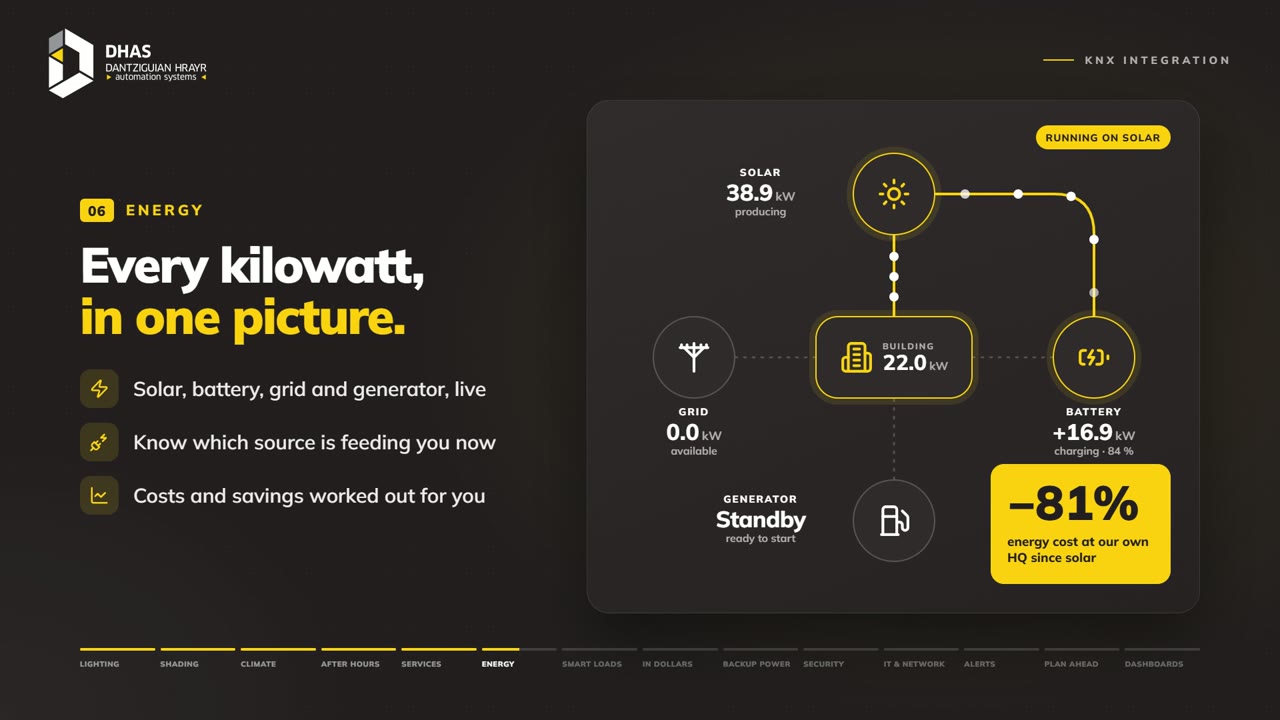
- Energy you can see: what is using power right now, and what can be switched off.
With presence detectors, keypads and touch panels in the right places, most rooms need no switch at all to be used.
Built for power cuts and solar
A home in Lebanon switches between the grid, a generator and, more and more, solar panels with batteries. A smart home can make the most of each source:
- The essentials keep working. We keep lighting and blinds on KNX itself, so they work even if the internet, the app or the server stops. The KNX system uses little power and can run from your UPS or solar battery.
- Cooling follows the energy available. Air-conditioning switches on in stages as the battery fills and the panels produce, and steps back when the battery drops. With no grid, it can wait for the battery or the sun instead of starting the generator.
- Spare solar is not wasted. Hot water is heated, and an electric car charged, with surplus solar energy.
- You know what is happening. A power cut, a UPS running on battery or a low water tank sends an alert to your phone.
This is how our own two KNX case studies run. In a private residence we designed, on one summer day in August 2026 the home used 76.2 kWh and drew only 1.2 kWh of it from the grid. At our headquarters, solar has supplied about 80 % of the energy the building used since October 2024. Read both case studies.
Wired KNX or wireless: which is right for your home?
Smart home products sold in Lebanon come in two families. Wireless devices (Wi-Fi or Zigbee) replace a switch or plug into a socket and are set up in an app. A wired KNX system is designed with the electrical works and installed in the walls and the electrical board, like the rest of the wiring.
| Wired KNX | Wireless (Wi-Fi, Zigbee) | |
|---|---|---|
| Best for | New homes and full renovations, villas, larger apartments, offices and hotels | A few rooms, rented homes, quick additions |
| Installation | A KNX bus cable runs to keypads and sensors; the switching modules sit in the electrical board. Planned with your electrician. | Devices replace switches or plug in. Each one needs a good wireless signal, and some need batteries. |
| Without internet | Everything in the home keeps working | Many products depend on the maker’s cloud app |
| Brands | Open standard: certified products from hundreds of manufacturers work together | Often tied to one app or one maker |
| Programming and support | Programmed with the ETS tool by a certified KNX partner; any certified partner can maintain it later | Set up in the maker’s app |
| Growing the system | Add rooms and functions step by step; new devices work with older ones | Depends on what the app supports |
The two can also work together: a supervisory layer such as Home Assistant can bring KNX and other devices into one app on your phone. That is how our own headquarters and the private residence we designed are run.
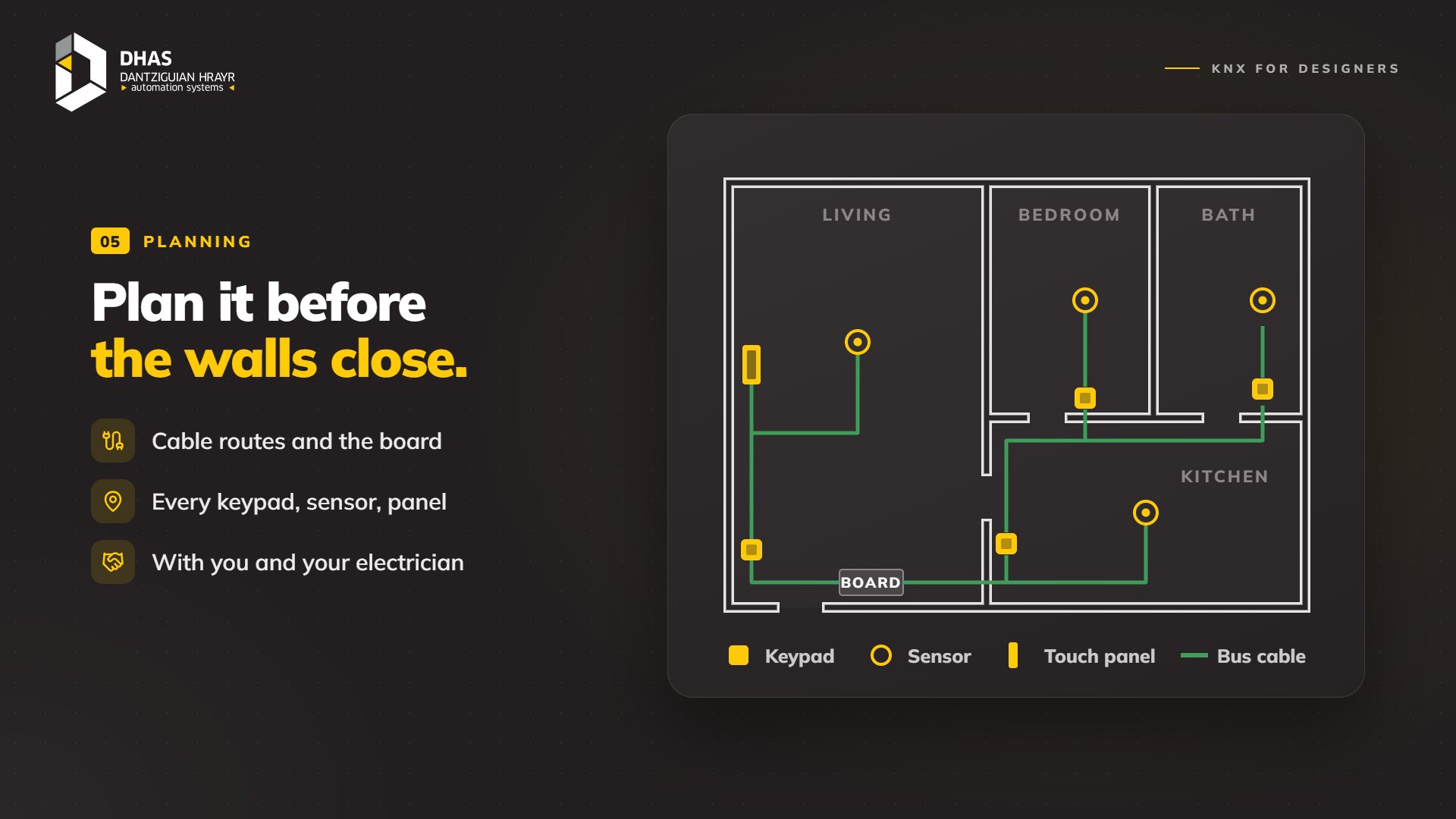
New apartment, villa or existing home
- New apartment or villa: plan the smart home before the electrical works start. We work with your architect and electrician on the cable routes, the electrical board and where each keypad, sensor and touch panel goes.
- Full renovation: the same as a new home, while the walls are open.
- Finished home: ask us what can be added with little building work, such as motorised curtains and blinds, air-conditioning control through gateways, and an app that brings them together.
Start with the essentials, usually lighting, blinds and air-conditioning, and add energy management, security and more later. A KNX system grows step by step.
Control it your way
- Keypads on the wall, with buttons for scenes as well as single lights.
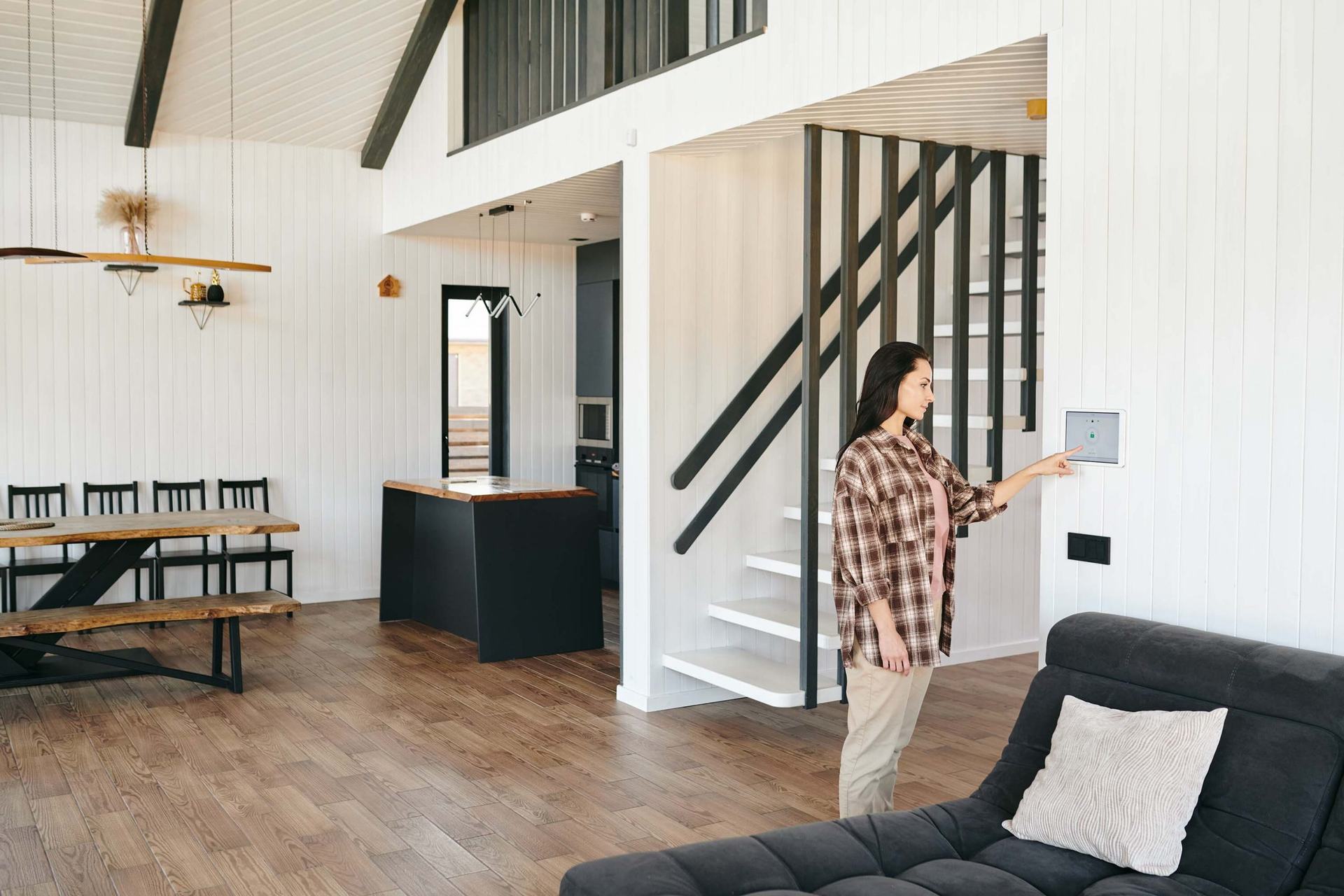
- Touch panels that show and control the whole home from one screen.
- Your phone, at home or away, through one app for the lights, blinds, air-conditioning, alarm, cameras and energy.
- Automatically, through presence detectors, schedules, a weather station on the roof and rules that react to the energy available.
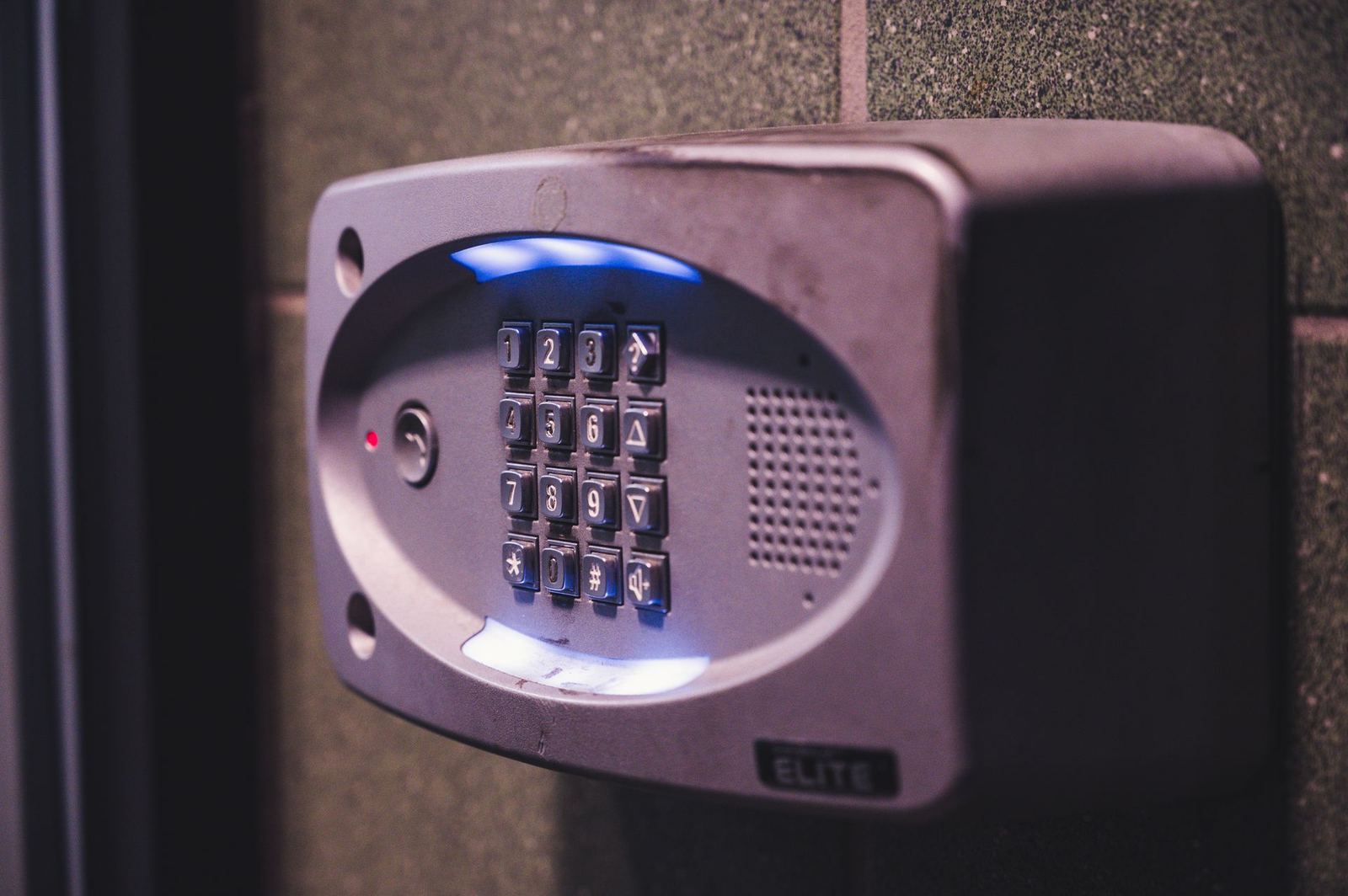
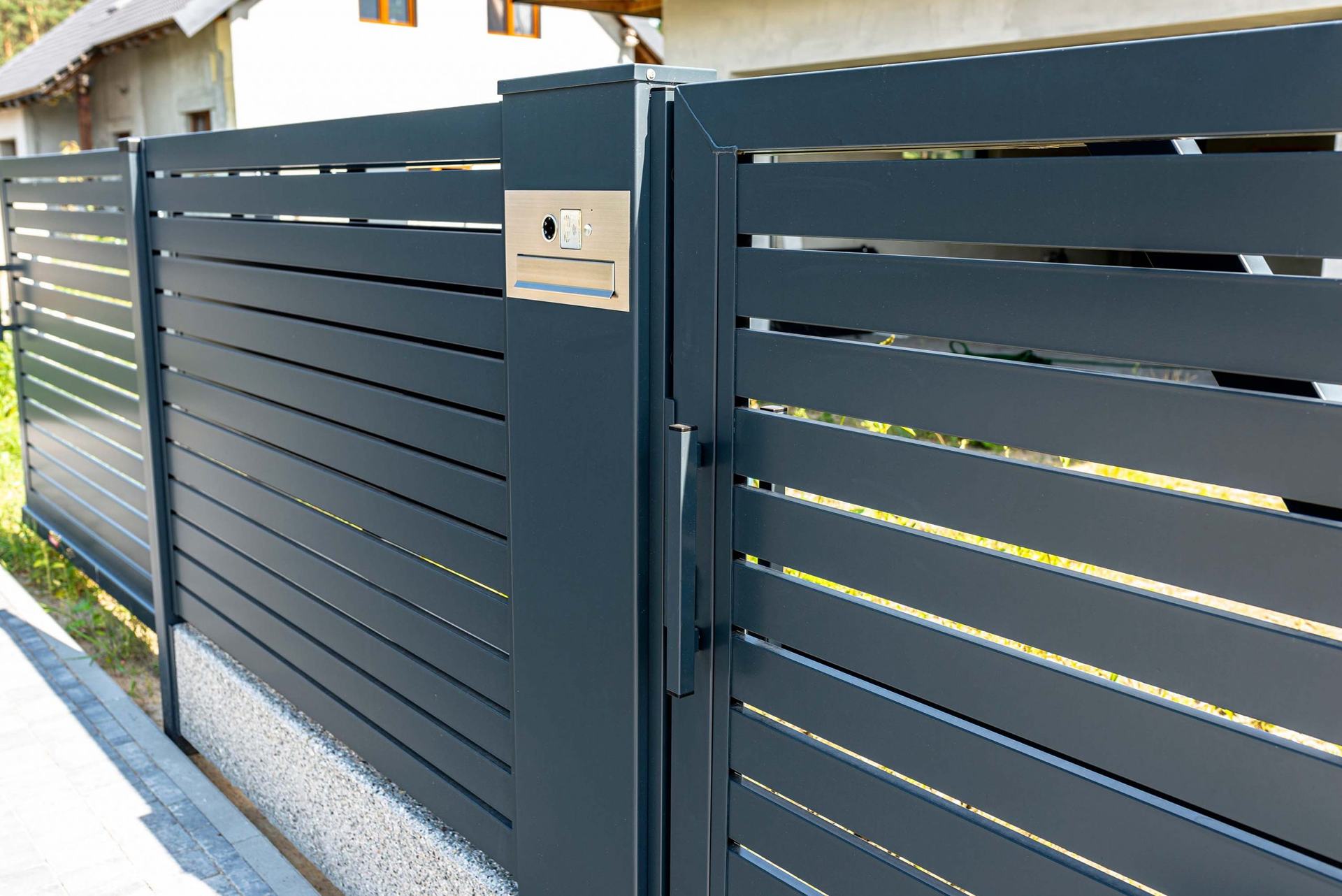
A smart IP video intercom lets you see and speak to visitors at the door or gate, and let them in, from a screen in the home or remotely.

What affects the cost of a smart home
Every home is different, so we design and quote each one after a site visit. The main things that shape the cost are:
- the number of rooms, lighting circuits, blinds and air-conditioning units;
- the functions you want now, and those you want to add later;
- the keypads and touch panels you choose, as design ranges differ;
- whether it is a new home, a renovation or a finished home;
- whether solar, the intercom, the alarm and the cameras are part of the same system.
Designed, installed and supported by one team
- Consulting and site survey — our consultants study the site with you, explain the options and give demos where needed (consulting).
- Design — a smart home designed in ETS around how you live: rooms, scenes, schedules and the keypads and panels that suit each space.
- Supply and installation — by DHAS technicians, with neat installation and on-site fine tuning (installation).
- Commissioning and handover — programming, testing, and training for the people who will use the system.
- Maintenance — maintenance contracts with scheduled visits keep the system at its best, extend its life and reduce false alarms (maintenance programs).
At handover we train the family on site: how to use the keypads, the panels and the app, and what to do if something stops working.
Frequently asked questions
Is a smart home worth it in Lebanon?
It makes daily life easier, makes the home safer, and helps you use solar and battery energy well instead of paying for the generator. Lighting, blinds and air-conditioning that switch off by themselves also save energy every day.
Does a smart home work during a power cut?
Yes, when it is planned for it. The KNX system uses little power and can run from your UPS or solar battery, and lighting and blinds keep working without the internet. The app can alert you when the grid goes off.
Can I control my home when I am away?
Yes. One app on your phone shows and controls the lights, blinds, air-conditioning, alarm and cameras, and sends alerts.
Can I make my existing apartment smart?
Often, yes. Motorised curtains and blinds, air-conditioning control and an app can be added with little building work. A full KNX system is easiest to install during a renovation, while the walls are open. We advise after a site visit.
What is the difference between KNX and Wi-Fi or Zigbee smart devices?
KNX is a wired, open standard installed with the electrical works, and keeps working without the internet. Wi-Fi and Zigbee devices are wireless and quicker to add, but are often tied to one maker’s app. See the comparison above.
Which brands do you install?
KNX-certified products from manufacturers such as MDT, Elsner, IDDERO, TAPKO, Schneider Electric and Siemens, chosen for each project. Because KNX is an open standard, they all work together on one system.
Who can maintain my system later?
DHAS offers maintenance contracts. Because KNX is an open standard, any certified KNX partner can also work on the system.
How much does a smart home cost?
It depends on the size of the home and the functions you choose. We give you a quote after a site visit, and you can start with the essentials and add more later.
Plan your smart home
Tell us about your home: an apartment or a villa, new or finished, and what you would like it to do. Call +961 1 68 37 70 or send us a message, and we will arrange a visit to your site.