Smart homes and buildings built on KNX
DHAS designs, supplies, installs and commissions KNX home and building automation in Lebanon, for villas, apartments, offices and hotels. Lighting, blinds and curtains, heating and cooling, energy management and security work together as one system, controlled from wall keypads and touch panels or running automatically through scenes and schedules.
DHAS is a KNX partner and hosts the only certified KNX training centre in Lebanon, where engineers and integrators earn KNX Partner certification. Read more about our KNX trainings.


What KNX can control
- Lighting — switching, dimming and scenes, including lighting controls on DALI.
- Sun protection — blinds, shutters and motorised curtains that move with the time of day or the weather.
- Room climate — heating, cooling and ventilation room by room.
- Energy management — switch off what is not needed and keep consumption under control.
- Security functions — link the home to alarms, access control and the intercom.
Our motorised curtain and blind systems can also be controlled from a smartphone or a single remote control. They protect curtains from tearing and keep them perfectly aligned, gliding smoothly even on the tightest curves.
An open standard, not a single brand
KNX is the worldwide standard for home and building control. Products from many manufacturers work together on the same system, so you are never tied to one brand, and the system can be expanded step by step, from simple room functions to solutions that combine several building services.
Every KNX system is commissioned with the vendor-independent ETS tool. Where a building needs other technologies, KNX interfaces connect to Ethernet/IP, wireless systems, DALI lighting controls and building automation systems.
Manufacturers on our partner list for KNX include MDT, Elsner, IDDERO, TAPKO, Schneider Electric and Siemens.
Intercom and entrance control
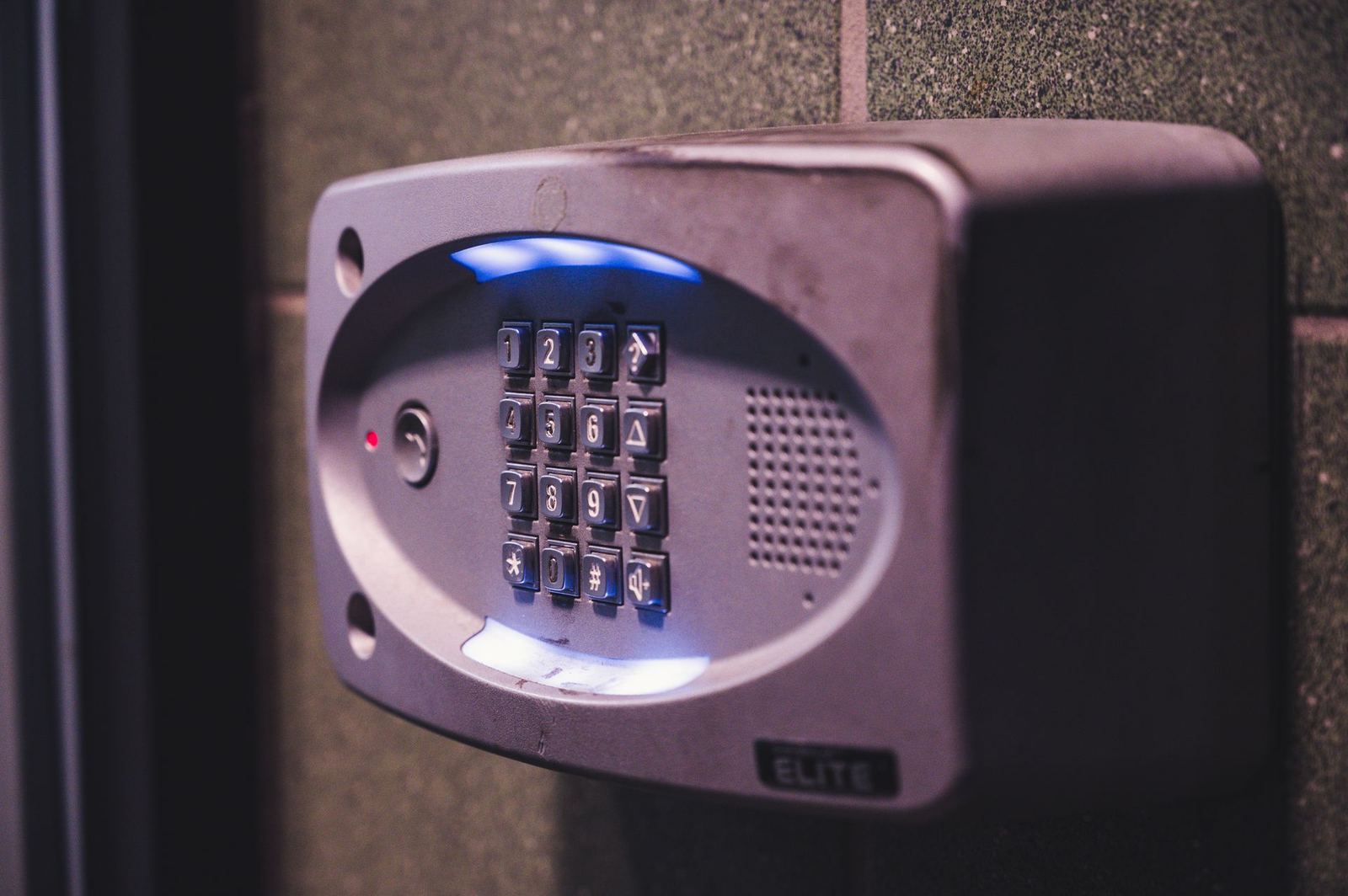
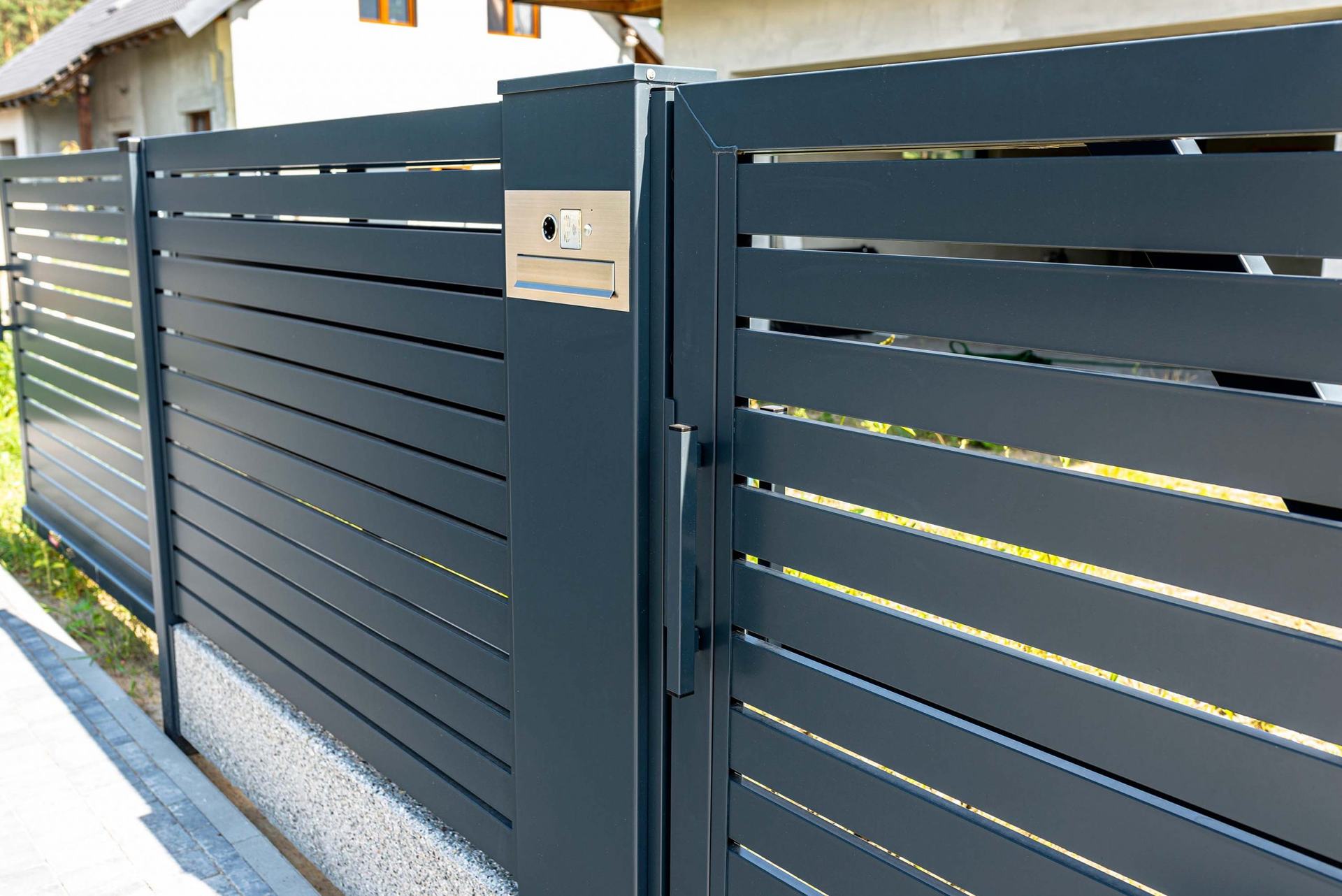
A smart IP video door phone lets you see and speak to visitors at the door or gate before letting them in, and makes the entrance more secure. Our IP intercom solutions cover:
- apartment and flat intercom with door access control
- remote entry over the internet
- office door phones with an on-site or hosted IP-PBX (SIP communication)
- business information or a welcome message for guests
For offices and residential buildings, intercom works hand in hand with access control.

Case study: our own headquarters
We run our own building on what we install. The DHAS headquarters in Mkalles, with its offices, showroom, stores and a KNX training centre, is one KNX installation, designed, programmed and maintained by our team.
- 80 KNX devices from ten manufacturers on one bus, including MDT, Elsner, Siemens, Zennio, Eelectron, IPAS, Steinel and ESYLUX. The training centre’s demonstration panels run on the same installation, so trainees learn on a working building.
- Lighting that follows people. Office lights are switched by presence detectors. Façade and security lights switch on at the daylight level a rooftop weather station measures, not by a clock.
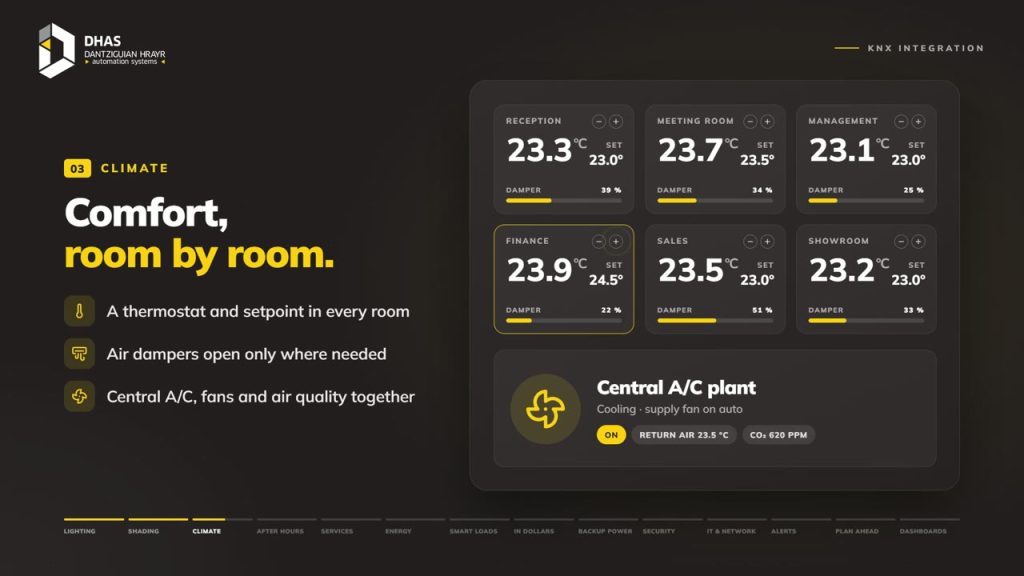
- Comfort room by room. Nine office zones each have their own thermostat and motorised air damper, served by one central ducted air-conditioning unit connected to KNX through a gateway.
- Nothing runs for nobody. When the offices empty, the socket circuits, the water cooler and the extract fan switch off by themselves, and the lavatory fans follow the lights.
- More on the same bus: the showroom’s eight motorised roll-up shutters, the water tank level with an alarm at 25 %, the server-room temperature, and frost and heat alarms.
Energy-aware, and watched around the clock
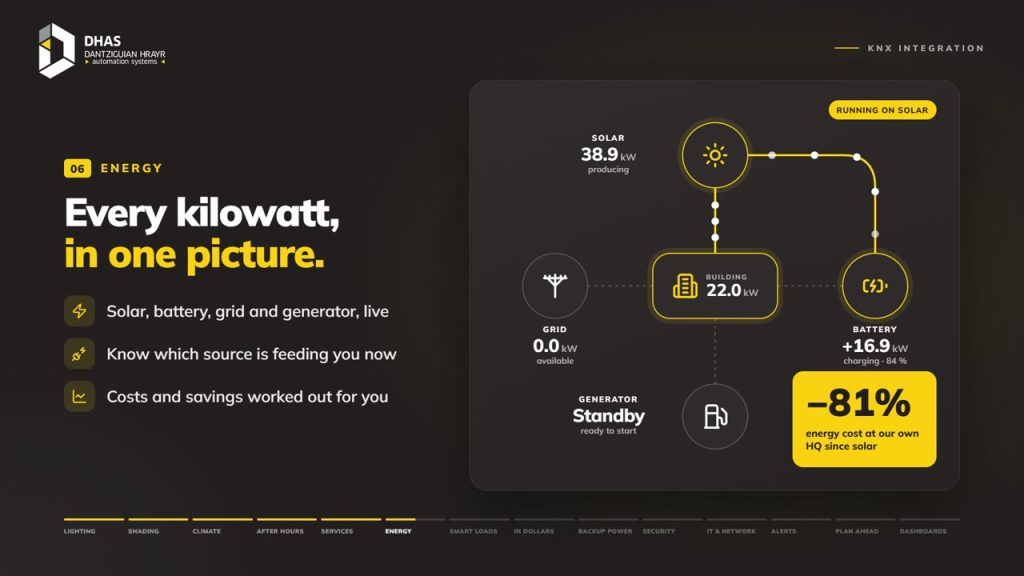
The building runs on a 50 kW hybrid solar system with battery storage, with the grid and an 80 kVA standby generator behind it. A supervisory layer reads KNX, the solar inverter, the generator, the fire panel and the UPS units: more than 500,000 readings a day, kept for years.
- After hours, empty rooms are set back to an economy temperature, each room’s own setting is restored before the working day starts, and the central air-conditioning switches off once the building is empty. Anyone staying late gets their own room back.
- No grid? The air-conditioning waits for the battery or the sun, instead of starting the generator to cool the building.
- More than 30 alert rules warn before problems: a weak generator starter battery, a failed start, a low water tank, a hot server room, a grid outage, a UPS running on battery. Every threshold was tested against the building’s own history before going live, so alerts are rare and worth reading. A weekly digest sums up the rest.
- Maintenance is planned, not reactive: generator service hours, an estimate of the fuel left and the dust on the solar panels are all tracked.
The result: since solar was added in October 2024, it has supplied about 80 % of the energy the building uses (about 140,000 kWh, read from the inverter’s own meters), and the yearly energy bill for diesel and grid has fallen by about 80 %, from about $18,800 to about $3,500. Solar does most of that work; the automation makes sure the energy is not spent on empty rooms.
What this means for your building: keep the essentials on KNX so they never depend on a server, add a supervisory layer for energy and alerts, and tune every alert on real data. The same approach fits offices, clinics, schools and hotels.
Case study: a private residence on KNX
A three-floor private residence in Lebanon, designed and programmed by DHAS, shows what a complete KNX home looks like in daily life.
- 56 KNX devices on one bus, from five manufacturers: MDT, Ekinex, Iddero, Elsner and Airzone.
- 35 lighting circuits, including colour (RGBW) LED lighting.
- 11 motorised blinds and a rooftop weather station that measures daylight from three directions, wind and outside temperature.
- 8 air-conditioning units joined to KNX through gateways, and 2 hot-water tanks.
- 10 presence detectors, 9 keypads and 3 touch panels, so most rooms need no switch at all to be used.
The house is built in two layers. KNX does the essentials: lighting and blinds run on KNX alone and keep working even if everything above it stops. A supervisory layer optimises: a home-automation server reads KNX, the solar system and the appliances (about 1,240 live readings) and makes the decisions that save energy.
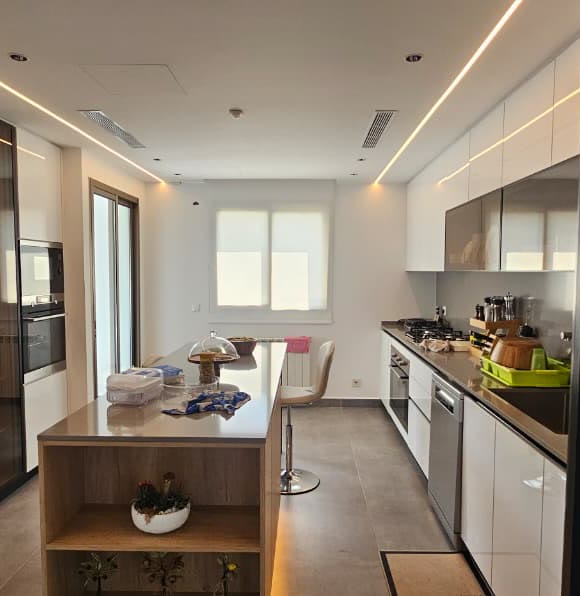
Comfort that follows the sun
The residence runs largely on solar power with battery storage, and its automation is built around that:
- Cooling follows the energy available. Air-conditioning switches on in stages as the battery fills and the panels produce, and steps back when the battery drops.
- Hot water is heated with spare energy, not when the grid or a generator would have to supply it.
- The car charges only from surplus solar.
- The panels are monitored for dust, and the gain from a wash is measured, so cleaning is done when it pays.
- Appliances and the water pump are watched, with alerts when the usage pattern suggests a leak.
- Every KNX message is logged, so a fault can be traced afterwards instead of guessed at.
On one summer day in August 2026, the home used 76.2 kWh of energy and drew only 1.2 kWh of it from the grid. That is a single measured day, not an average, but it shows what a well-integrated home can do.
What this means for your project: plan KNX before the electrical works start; keep lighting and blinds on KNX so they never depend on a server; and add a supervisory layer when you want the home to manage energy on its own.
Designed, installed and supported by one team
- Consulting and site survey — our consultants study the site with you, explain the options and give demos where needed (consulting).
- Design — a KNX project designed in ETS around how you live or work: rooms, scenes, schedules and the devices that suit each space.
- Supply and installation — by DHAS technicians, with neat installation and on-site fine tuning (installation).
- Commissioning and handover — programming, testing, and training for the people who will use the system.
- Maintenance — maintenance contracts with scheduled visits keep the system at its best, extend its life and reduce false alarms (maintenance programs).
When the system is handed over, DHAS trains the people who will use it on site: how to operate and test it, a detailed review of its functions, and guidelines for maintenance and cleaning.
KNX training in Lebanon
DHAS hosts the only certified KNX training centre in Lebanon. Our courses follow the KNX Association’s certification scheme and lead to KNX Partner certification, covering project design with ETS, installation and configuration, commissioning and troubleshooting, with hands-on practice on real KNX devices. See our KNX training page for details.
Frequently asked questions
What is KNX?
KNX is the worldwide standard for home and building control. Switches, sensors, actuators and panels from many manufacturers share one system and are set up with the same ETS tool, so lighting, blinds, climate and security can work together.
Can KNX be installed in an existing home?
It is easiest to plan during construction or renovation, when the KNX cable is laid with the electrical wiring. KNX also connects to wireless systems, which helps when extending an existing building.
Can we add functions later?
Yes. KNX is designed for flexible expansion: you can start with lighting and blinds and add climate, energy management or security later.
Will we be tied to one manufacturer?
No. KNX is vendor-independent, so devices from different KNX manufacturers can be combined and replaced.
Can curtains and blinds be controlled from a phone?
Yes. Our motorised curtain and blind systems can be controlled from a smartphone or a single remote control.
Who shows us how to use the system?
DHAS provides on-site training for the people who use the systems we supply, covering operation and testing, the system’s functions, and maintenance and cleaning guidelines.
Plan your smart home or building
The best time to plan home automation is before the electrical works start. Tell us about your project, whether a villa, an apartment, an office or a hotel. Call +961 1 68 37 70 or send us a message, and we will arrange a visit to your site.